Subsea Production Systems Supporting Offshore Operations
https://www.marketresearchfuture.com/reports/subsea-manifolds-market-3138
As per Market Research Future, subsea production systems
play a critical role in enabling efficient oil and gas extraction from offshore fields, particularly in deepwater and ultra-deepwater environments. These systems are designed to operate on the seabed and manage the flow of hydrocarbons from wells to processing facilities, either on offshore platforms or onshore installations. With increasing exploration activities in challenging offshore locations, subsea production systems have become an essential component of modern energy infrastructure.
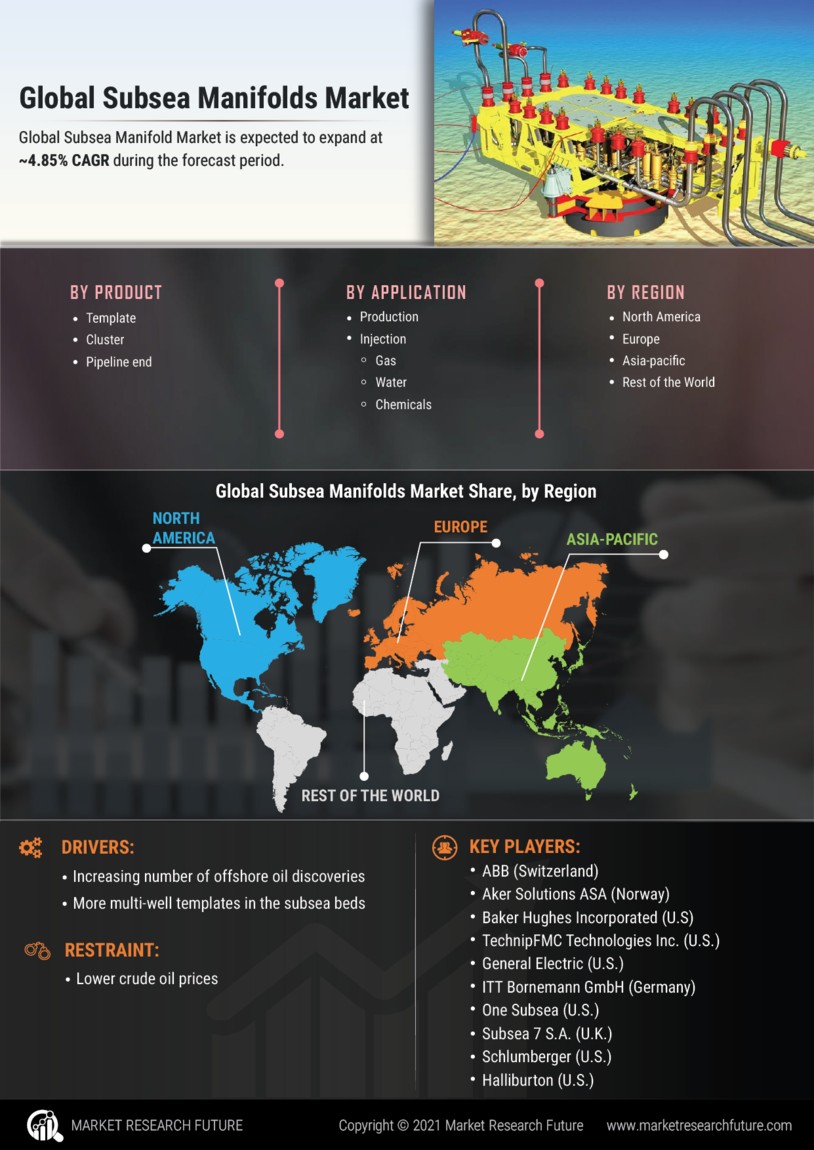
Subsea production systems consist of several integrated elements, including subsea trees, manifolds, control systems, umbilicals, flowlines, and risers. Together, these components regulate pressure, control production rates, and ensure safe transportation of oil and gas. Subsea trees, often referred to as “Christmas trees,” are installed on wellheads to control flow and monitor well conditions. Manifolds act as gathering points, combining production from multiple wells into a single flowline, which improves operational efficiency and reduces infrastructure costs.
One of the key drivers behind the adoption of subsea production systems is the shift toward deepwater exploration. As shallow-water reserves mature, energy companies are increasingly focusing on deeper reservoirs that require advanced subsea solutions. These systems allow operators to develop fields that would otherwise be economically or technically unfeasible using traditional platform-based approaches. In addition, subsea tieback solutions enable existing infrastructure to be utilized more effectively by connecting new wells to established facilities.
Technological advancements have significantly enhanced the reliability and performance of subsea production systems. Innovations in digital monitoring, remote operation, and automation have improved real-time data collection and predictive maintenance. Advanced materials and coatings have increased resistance to corrosion and extreme pressures, extending equipment lifespan and reducing downtime. Electrification of subsea systems is also gaining attention, as it supports lower emissions and improved energy efficiency.
Environmental and safety considerations are another important aspect shaping the development of subsea production systems. By placing equipment on the seabed, surface installations are minimized, reducing visual impact and exposure to harsh weather conditions. Enhanced monitoring capabilities help detect leaks or pressure anomalies early, supporting safer operations and environmental protection. These factors are increasingly important as regulatory scrutiny and sustainability expectations continue to rise.
Regionally, subsea production systems are widely deployed in offshore regions such as the North Sea, the Gulf of Mexico, offshore Brazil, and West Africa. Emerging offshore developments in Asia-Pacific are also contributing to market expansion, driven by rising energy demand and ongoing investments in offshore exploration.
Overall, subsea production systems are a cornerstone of offshore oil and gas development. Their ability to support complex field architectures, improve recovery rates, and enhance safety makes them indispensable for meeting global energy needs in challenging offshore environments.
FAQs
What are subsea production systems used for?
They are used to control, process, and transport oil and gas from offshore wells located on the seabed to processing facilities.
Why are subsea production systems important for deepwater fields?
They enable efficient production in deep and ultra-deep waters where surface platforms may be impractical or too costly.
What technologies are improving subsea production systems?
Digital monitoring, automation, advanced materials, and subsea electrification are key technologies enhancing performance and reliability.
Subsea Production Systems Supporting Offshore Operations
https://www.marketresearchfuture.com/reports/subsea-manifolds-market-3138
As per Market Research Future, subsea production systems
play a critical role in enabling efficient oil and gas extraction from offshore fields, particularly in deepwater and ultra-deepwater environments. These systems are designed to operate on the seabed and manage the flow of hydrocarbons from wells to processing facilities, either on offshore platforms or onshore installations. With increasing exploration activities in challenging offshore locations, subsea production systems have become an essential component of modern energy infrastructure.
Subsea production systems consist of several integrated elements, including subsea trees, manifolds, control systems, umbilicals, flowlines, and risers. Together, these components regulate pressure, control production rates, and ensure safe transportation of oil and gas. Subsea trees, often referred to as “Christmas trees,” are installed on wellheads to control flow and monitor well conditions. Manifolds act as gathering points, combining production from multiple wells into a single flowline, which improves operational efficiency and reduces infrastructure costs.
One of the key drivers behind the adoption of subsea production systems is the shift toward deepwater exploration. As shallow-water reserves mature, energy companies are increasingly focusing on deeper reservoirs that require advanced subsea solutions. These systems allow operators to develop fields that would otherwise be economically or technically unfeasible using traditional platform-based approaches. In addition, subsea tieback solutions enable existing infrastructure to be utilized more effectively by connecting new wells to established facilities.
Technological advancements have significantly enhanced the reliability and performance of subsea production systems. Innovations in digital monitoring, remote operation, and automation have improved real-time data collection and predictive maintenance. Advanced materials and coatings have increased resistance to corrosion and extreme pressures, extending equipment lifespan and reducing downtime. Electrification of subsea systems is also gaining attention, as it supports lower emissions and improved energy efficiency.
Environmental and safety considerations are another important aspect shaping the development of subsea production systems. By placing equipment on the seabed, surface installations are minimized, reducing visual impact and exposure to harsh weather conditions. Enhanced monitoring capabilities help detect leaks or pressure anomalies early, supporting safer operations and environmental protection. These factors are increasingly important as regulatory scrutiny and sustainability expectations continue to rise.
Regionally, subsea production systems are widely deployed in offshore regions such as the North Sea, the Gulf of Mexico, offshore Brazil, and West Africa. Emerging offshore developments in Asia-Pacific are also contributing to market expansion, driven by rising energy demand and ongoing investments in offshore exploration.
Overall, subsea production systems are a cornerstone of offshore oil and gas development. Their ability to support complex field architectures, improve recovery rates, and enhance safety makes them indispensable for meeting global energy needs in challenging offshore environments.
FAQs
What are subsea production systems used for?
They are used to control, process, and transport oil and gas from offshore wells located on the seabed to processing facilities.
Why are subsea production systems important for deepwater fields?
They enable efficient production in deep and ultra-deep waters where surface platforms may be impractical or too costly.
What technologies are improving subsea production systems?
Digital monitoring, automation, advanced materials, and subsea electrification are key technologies enhancing performance and reliability.




 How To Earn On Freecave



 Arabic
 French
 Spanish
 Portuguese
 Deutsch
 Turkish
 Dutch
Dutch
 Italiano
 Russian
 Romaian
 Portuguese (Brazil)
 Greek
Greek
