Portable Generator Industry Analysis Including Manufacturing and Distribution Channels
https://www.marketresearchfuture.com/reports/portable-generator-market-5854
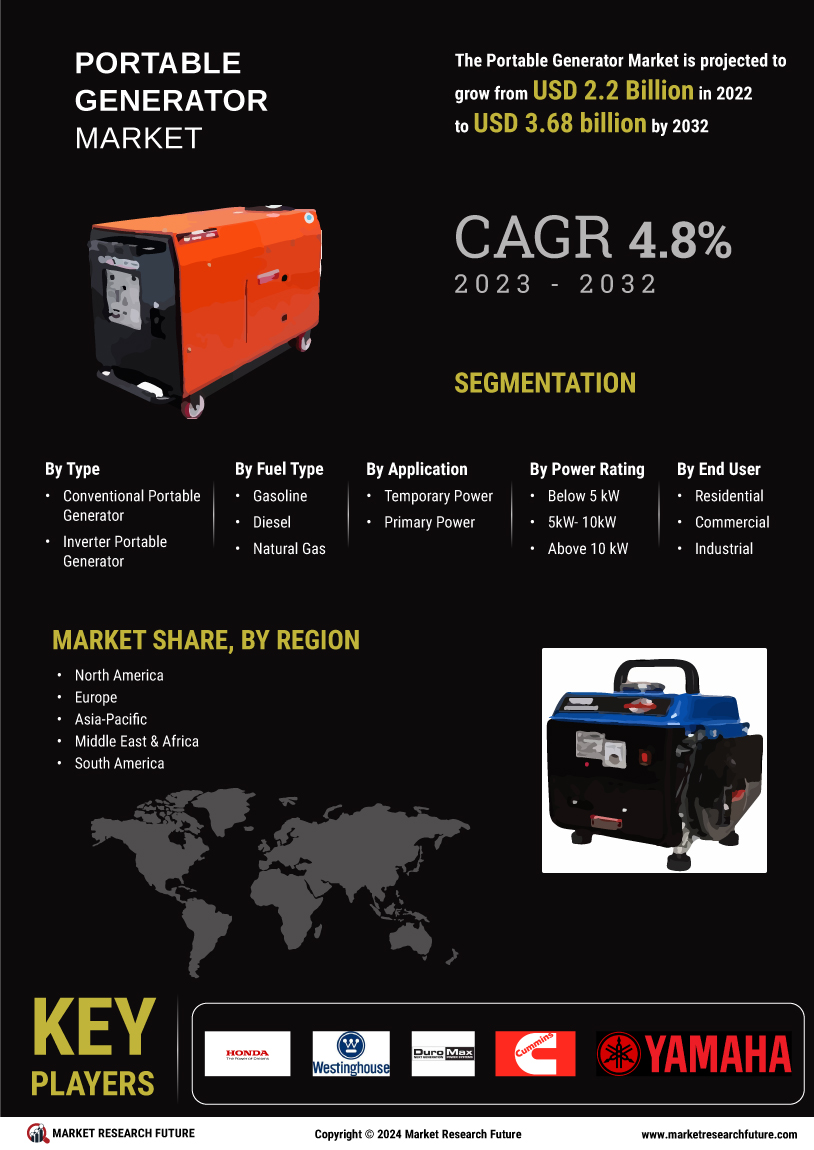
As per Market Research Future, the Portable Generator Industry is witnessing steady growth driven by rising demand for reliable backup power across residential, commercial, and industrial applications. Increasing frequency of power outages, extreme weather events, and infrastructure gaps in developing regions have elevated the importance of portable generators as an accessible and flexible energy solution. Their ease of mobility, relatively low installation requirements, and expanding fuel options have further strengthened adoption worldwide.
Portable generators are compact power-producing devices designed to deliver electricity during emergencies or in off-grid locations. Unlike standby generators, they can be moved easily and used across multiple locations, making them particularly attractive for households, construction sites, outdoor events, and small businesses. The growing reliance on electronic devices and appliances has increased the need for uninterrupted power, pushing consumers to invest in dependable backup systems.
One of the key drivers of the portable generator market is the rising occurrence of power disruptions caused by aging grid infrastructure and climate-related events such as hurricanes, floods, and heatwaves. In both developed and developing economies, consumers are seeking cost-effective alternatives to permanent power systems. Portable generators provide a practical solution, especially in regions where grid reliability remains inconsistent. Additionally, rapid urbanization and construction activities have increased demand for temporary power sources at job sites.
Fuel type segmentation plays a critical role in shaping the industry landscape. Gasoline-powered generators continue to dominate due to their affordability and widespread availability. However, diesel generators are favored in industrial and commercial settings for their durability and fuel efficiency. Propane and dual-fuel generators are gaining popularity as cleaner-burning alternatives that offer flexibility and lower emissions. Innovations in battery-powered and inverter-based generators are also emerging, aligning with sustainability goals and noise reduction requirements.
FAQs
What is driving the growth of the portable generator industry?
The industry is driven by increasing power outages, extreme weather events, construction activities, and the need for reliable backup power across residential and commercial sectors.
Which fuel type is most commonly used in portable generators?
Gasoline-powered generators are the most commonly used due to their affordability and easy fuel availability, though diesel and propane options are gaining traction.
Are portable generators environmentally friendly?
Traditional portable generators have environmental impacts, but newer models with inverter technology, cleaner fuels, and improved efficiency are reducing emissions and noise levels.
Portable Generator Industry Analysis Including Manufacturing and Distribution Channels
https://www.marketresearchfuture.com/reports/portable-generator-market-5854
As per Market Research Future, the Portable Generator Industry is witnessing steady growth driven by rising demand for reliable backup power across residential, commercial, and industrial applications. Increasing frequency of power outages, extreme weather events, and infrastructure gaps in developing regions have elevated the importance of portable generators as an accessible and flexible energy solution. Their ease of mobility, relatively low installation requirements, and expanding fuel options have further strengthened adoption worldwide.
Portable generators are compact power-producing devices designed to deliver electricity during emergencies or in off-grid locations. Unlike standby generators, they can be moved easily and used across multiple locations, making them particularly attractive for households, construction sites, outdoor events, and small businesses. The growing reliance on electronic devices and appliances has increased the need for uninterrupted power, pushing consumers to invest in dependable backup systems.
One of the key drivers of the portable generator market is the rising occurrence of power disruptions caused by aging grid infrastructure and climate-related events such as hurricanes, floods, and heatwaves. In both developed and developing economies, consumers are seeking cost-effective alternatives to permanent power systems. Portable generators provide a practical solution, especially in regions where grid reliability remains inconsistent. Additionally, rapid urbanization and construction activities have increased demand for temporary power sources at job sites.
Fuel type segmentation plays a critical role in shaping the industry landscape. Gasoline-powered generators continue to dominate due to their affordability and widespread availability. However, diesel generators are favored in industrial and commercial settings for their durability and fuel efficiency. Propane and dual-fuel generators are gaining popularity as cleaner-burning alternatives that offer flexibility and lower emissions. Innovations in battery-powered and inverter-based generators are also emerging, aligning with sustainability goals and noise reduction requirements.
FAQs
What is driving the growth of the portable generator industry?
The industry is driven by increasing power outages, extreme weather events, construction activities, and the need for reliable backup power across residential and commercial sectors.
Which fuel type is most commonly used in portable generators?
Gasoline-powered generators are the most commonly used due to their affordability and easy fuel availability, though diesel and propane options are gaining traction.
Are portable generators environmentally friendly?
Traditional portable generators have environmental impacts, but newer models with inverter technology, cleaner fuels, and improved efficiency are reducing emissions and noise levels.




 How To Earn On Freecave



 English
 Arabic
 French
 Spanish
 Portuguese
 Deutsch
 Turkish
 Dutch
Dutch
 Russian
 Romaian
 Portuguese (Brazil)
 Greek
Greek
