Self Powered Devices Using Harvested Energy
https://www.marketresearchfuture.com/reports/energy-harvesting-market-1051
As per Market Research Future, the global self powered devices
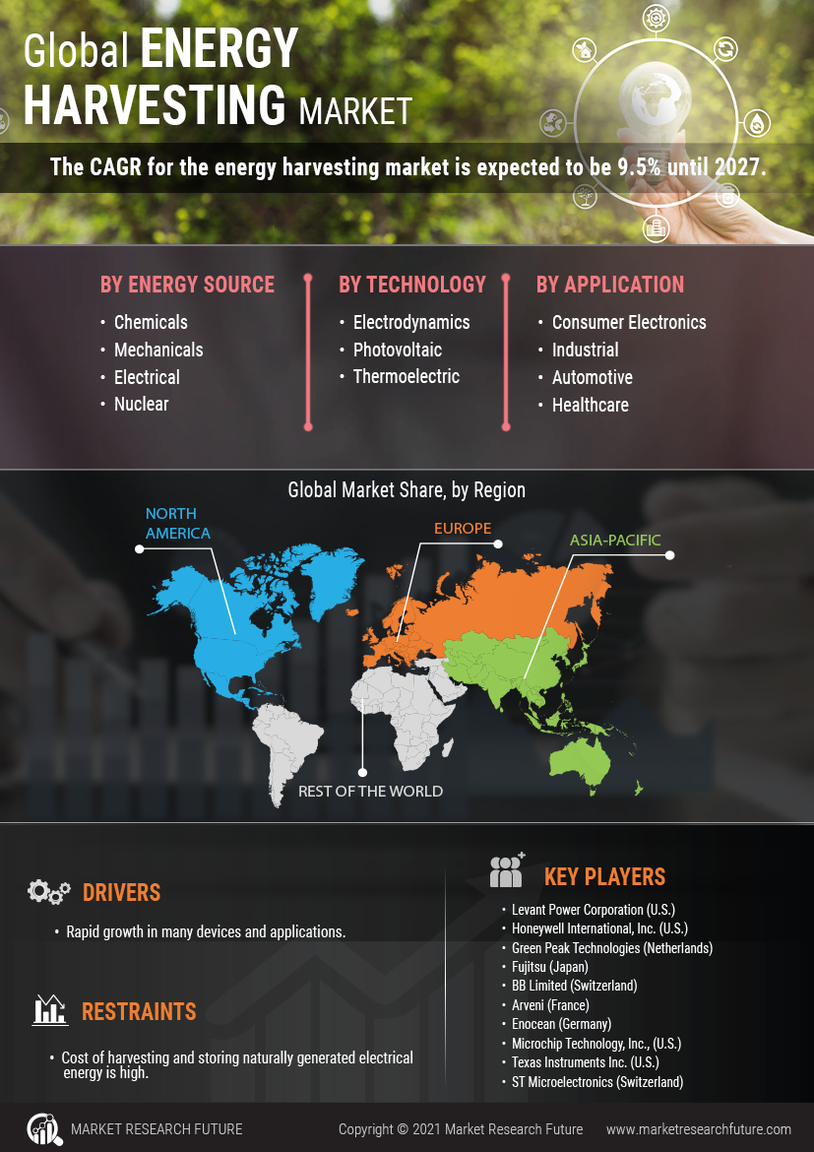
market is witnessing rapid growth due to rising demand for energy-efficient and sustainable electronic devices. Self powered devices, which generate their own energy from the environment, are revolutionizing industries ranging from consumer electronics to healthcare and industrial automation. With increasing energy costs and environmental concerns, these devices are becoming critical in enabling low-power, reliable operations without frequent battery replacements or dependency on external power sources.
Self powered devices leverage various energy harvesting technologies such as piezoelectric, thermoelectric, solar, and radio frequency (RF) energy conversion. Piezoelectric devices convert mechanical vibrations or pressure into electricity, making them ideal for wearable electronics, medical implants, and industrial sensors. Thermoelectric generators, on the other hand, exploit temperature gradients to produce power, which can be applied in automotive and aerospace sectors for waste heat recovery. Solar-powered self powered devices utilize ambient light for continuous energy generation, while RF energy harvesting enables wireless devices to extract power from surrounding electromagnetic signals.
The adoption of self powered devices is particularly notable in the Internet of Things (IoT) ecosystem. IoT devices require continuous operation in remote or inaccessible locations, and self powered technology reduces maintenance costs while improving system reliability. Smart buildings, environmental monitoring systems, and wearable health devices are increasingly integrating self powered solutions, allowing seamless functionality without frequent human intervention. Additionally, the miniaturization of sensors and advancements in low-power electronics further enhance the feasibility of self powered devices in various applications.
The healthcare sector is witnessing a significant transformation with self powered medical devices. Implantable devices, such as pacemakers and neurostimulators, benefit from energy harvesting, eliminating the need for periodic surgeries to replace batteries. Similarly, wearable health monitors leverage body motion and heat to generate electricity, ensuring continuous monitoring of vital parameters like heart rate and glucose levels. This not only improves patient comfort but also enhances the quality of remote healthcare delivery.
Industrial and automotive applications are also driving market growth. Wireless sensors for machinery health monitoring, vibration-powered smart meters, and energy-efficient automotive sensors are key examples where self powered devices reduce operational costs while enhancing performance. Moreover, environmental benefits such as lower battery waste and reduced carbon footprint further boost the adoption of these devices across sectors.
Challenges remain in terms of optimizing energy conversion efficiency and managing energy storage for consistent device operation. However, ongoing research in nanomaterials, flexible electronics, and hybrid energy harvesting techniques is expected to address these issues, paving the way for a more sustainable future.
Overall, self powered devices are not only transforming traditional electronics but are also redefining energy efficiency standards across industries. The growing emphasis on sustainability, combined with technological innovation, positions self powered devices as a cornerstone of the future of electronics and smart systems.
FAQs
Q1: What are self powered devices?
A1: Self powered devices are electronic systems that generate their own energy from ambient sources like light, heat, vibration, or electromagnetic waves, reducing or eliminating the need for external power.
Q2: Where are self powered devices commonly used?
A2: They are widely used in healthcare (implantables and wearables), industrial automation, IoT devices, smart buildings, and automotive sensors.
Q3: What are the main energy sources for self powered devices?
A3: Key sources include mechanical vibrations (piezoelectric), temperature differences (thermoelectric), solar light, and radio frequency signals.
Self Powered Devices Using Harvested Energy
https://www.marketresearchfuture.com/reports/energy-harvesting-market-1051
As per Market Research Future, the global self powered devices
market is witnessing rapid growth due to rising demand for energy-efficient and sustainable electronic devices. Self powered devices, which generate their own energy from the environment, are revolutionizing industries ranging from consumer electronics to healthcare and industrial automation. With increasing energy costs and environmental concerns, these devices are becoming critical in enabling low-power, reliable operations without frequent battery replacements or dependency on external power sources.
Self powered devices leverage various energy harvesting technologies such as piezoelectric, thermoelectric, solar, and radio frequency (RF) energy conversion. Piezoelectric devices convert mechanical vibrations or pressure into electricity, making them ideal for wearable electronics, medical implants, and industrial sensors. Thermoelectric generators, on the other hand, exploit temperature gradients to produce power, which can be applied in automotive and aerospace sectors for waste heat recovery. Solar-powered self powered devices utilize ambient light for continuous energy generation, while RF energy harvesting enables wireless devices to extract power from surrounding electromagnetic signals.
The adoption of self powered devices is particularly notable in the Internet of Things (IoT) ecosystem. IoT devices require continuous operation in remote or inaccessible locations, and self powered technology reduces maintenance costs while improving system reliability. Smart buildings, environmental monitoring systems, and wearable health devices are increasingly integrating self powered solutions, allowing seamless functionality without frequent human intervention. Additionally, the miniaturization of sensors and advancements in low-power electronics further enhance the feasibility of self powered devices in various applications.
The healthcare sector is witnessing a significant transformation with self powered medical devices. Implantable devices, such as pacemakers and neurostimulators, benefit from energy harvesting, eliminating the need for periodic surgeries to replace batteries. Similarly, wearable health monitors leverage body motion and heat to generate electricity, ensuring continuous monitoring of vital parameters like heart rate and glucose levels. This not only improves patient comfort but also enhances the quality of remote healthcare delivery.
Industrial and automotive applications are also driving market growth. Wireless sensors for machinery health monitoring, vibration-powered smart meters, and energy-efficient automotive sensors are key examples where self powered devices reduce operational costs while enhancing performance. Moreover, environmental benefits such as lower battery waste and reduced carbon footprint further boost the adoption of these devices across sectors.
Challenges remain in terms of optimizing energy conversion efficiency and managing energy storage for consistent device operation. However, ongoing research in nanomaterials, flexible electronics, and hybrid energy harvesting techniques is expected to address these issues, paving the way for a more sustainable future.
Overall, self powered devices are not only transforming traditional electronics but are also redefining energy efficiency standards across industries. The growing emphasis on sustainability, combined with technological innovation, positions self powered devices as a cornerstone of the future of electronics and smart systems.
FAQs
Q1: What are self powered devices?
A1: Self powered devices are electronic systems that generate their own energy from ambient sources like light, heat, vibration, or electromagnetic waves, reducing or eliminating the need for external power.
Q2: Where are self powered devices commonly used?
A2: They are widely used in healthcare (implantables and wearables), industrial automation, IoT devices, smart buildings, and automotive sensors.
Q3: What are the main energy sources for self powered devices?
A3: Key sources include mechanical vibrations (piezoelectric), temperature differences (thermoelectric), solar light, and radio frequency signals.




 How To Earn On Freecave


 Arabic
 French
 Spanish
 Portuguese
 Deutsch
 Turkish
 Dutch
Dutch
 Italiano
 Russian
 Romaian
 Portuguese (Brazil)
 Greek
Greek
