• Ramzan #family #Goal
    Ramzan #family #Goal
    πŸ‘οΈ 0 | πŸ’° Rs 0.00
    0 Commenti 0 condivisioni
    0 Anteprima
  • Europe Renewable Energy Market Growth Driven by Decarbonization Policies
    https://www.marketresearchfuture.com/reports/europe-renewable-energy-market-21637

    The rapid shift toward sustainable energy solutions has placed Europe at the forefront of the global clean energy transition. The Europe Renewable Energy Market Growth reflects the region’s strong commitment to reducing carbon emissions, improving energy security, and achieving long-term climate targets. With supportive government policies, advanced technologies, and increasing investments in renewable infrastructure, Europe has become one of the world’s most dynamic renewable energy markets.

    Renewable energy sources such as wind, solar, hydropower, and biomass play a crucial role in Europe’s energy mix. Governments across the region are implementing ambitious climate strategies aligned with international agreements aimed at reducing greenhouse gas emissions. The European Union’s long-term sustainability initiatives and carbon neutrality targets are driving large-scale renewable energy projects across multiple countries.

    One of the key drivers of renewable energy market growth in Europe is the strong regulatory framework that encourages investment in clean energy technologies. Many European countries have introduced incentives such as feed-in tariffs, tax credits, and renewable energy auctions to support project development. These policies have helped attract private investments and encourage the deployment of renewable power generation facilities.

    Wind energy remains one of the most significant contributors to Europe’s renewable energy capacity. Offshore wind farms in countries such as the United Kingdom, Germany, and the Netherlands have expanded rapidly due to favorable geographic conditions and technological advancements. Offshore wind projects are capable of generating large amounts of electricity, making them an essential component of Europe’s renewable energy strategy.

    Solar energy is also experiencing substantial growth across the continent. Rooftop solar installations and large-scale solar farms are becoming increasingly common as the cost of photovoltaic technology continues to decline. Countries such as Germany, Spain, and Italy have been pioneers in solar energy adoption, encouraging both residential and commercial sectors to invest in solar power systems.

    Energy storage technologies are another critical element supporting renewable energy growth in Europe. Because renewable sources like wind and solar are intermittent, advanced storage solutions such as battery systems and hydrogen storage are being developed to ensure reliable power supply. These technologies help stabilize electricity grids and enable the integration of higher levels of renewable energy.

    Technological innovation is playing a vital role in expanding Europe’s renewable energy market. Improvements in turbine efficiency, solar panel performance, and grid management systems are increasing the overall productivity of renewable power plants. Digital technologies, including smart grids and artificial intelligence, are also helping optimize energy generation and distribution.

    The renewable energy market in Europe is also benefiting from strong public support for sustainability initiatives. Consumers and businesses are increasingly adopting clean energy solutions to reduce their environmental footprint. Corporate renewable energy procurement, including power purchase agreements (PPAs), has become a major trend as companies seek to meet sustainability goals.

    Despite the positive outlook, the market still faces certain challenges. Infrastructure development, grid integration, and regulatory complexities can sometimes slow the pace of renewable energy expansion. However, continuous investments, policy support, and technological advancements are expected to address these challenges over time.

    Overall, the future of the renewable energy market in Europe appears highly promising. With ambitious climate targets, growing investments, and ongoing technological innovation, the region is likely to remain a global leader in renewable energy development for years to come.

    Europe Renewable Energy Market Growth Driven by Decarbonization Policies https://www.marketresearchfuture.com/reports/europe-renewable-energy-market-21637 The rapid shift toward sustainable energy solutions has placed Europe at the forefront of the global clean energy transition. The Europe Renewable Energy Market Growth reflects the region’s strong commitment to reducing carbon emissions, improving energy security, and achieving long-term climate targets. With supportive government policies, advanced technologies, and increasing investments in renewable infrastructure, Europe has become one of the world’s most dynamic renewable energy markets. Renewable energy sources such as wind, solar, hydropower, and biomass play a crucial role in Europe’s energy mix. Governments across the region are implementing ambitious climate strategies aligned with international agreements aimed at reducing greenhouse gas emissions. The European Union’s long-term sustainability initiatives and carbon neutrality targets are driving large-scale renewable energy projects across multiple countries. One of the key drivers of renewable energy market growth in Europe is the strong regulatory framework that encourages investment in clean energy technologies. Many European countries have introduced incentives such as feed-in tariffs, tax credits, and renewable energy auctions to support project development. These policies have helped attract private investments and encourage the deployment of renewable power generation facilities. Wind energy remains one of the most significant contributors to Europe’s renewable energy capacity. Offshore wind farms in countries such as the United Kingdom, Germany, and the Netherlands have expanded rapidly due to favorable geographic conditions and technological advancements. Offshore wind projects are capable of generating large amounts of electricity, making them an essential component of Europe’s renewable energy strategy. Solar energy is also experiencing substantial growth across the continent. Rooftop solar installations and large-scale solar farms are becoming increasingly common as the cost of photovoltaic technology continues to decline. Countries such as Germany, Spain, and Italy have been pioneers in solar energy adoption, encouraging both residential and commercial sectors to invest in solar power systems. Energy storage technologies are another critical element supporting renewable energy growth in Europe. Because renewable sources like wind and solar are intermittent, advanced storage solutions such as battery systems and hydrogen storage are being developed to ensure reliable power supply. These technologies help stabilize electricity grids and enable the integration of higher levels of renewable energy. Technological innovation is playing a vital role in expanding Europe’s renewable energy market. Improvements in turbine efficiency, solar panel performance, and grid management systems are increasing the overall productivity of renewable power plants. Digital technologies, including smart grids and artificial intelligence, are also helping optimize energy generation and distribution. The renewable energy market in Europe is also benefiting from strong public support for sustainability initiatives. Consumers and businesses are increasingly adopting clean energy solutions to reduce their environmental footprint. Corporate renewable energy procurement, including power purchase agreements (PPAs), has become a major trend as companies seek to meet sustainability goals. Despite the positive outlook, the market still faces certain challenges. Infrastructure development, grid integration, and regulatory complexities can sometimes slow the pace of renewable energy expansion. However, continuous investments, policy support, and technological advancements are expected to address these challenges over time. Overall, the future of the renewable energy market in Europe appears highly promising. With ambitious climate targets, growing investments, and ongoing technological innovation, the region is likely to remain a global leader in renewable energy development for years to come.
    WWW.MARKETRESEARCHFUTURE.COM
    Europe Renewable Energy Market Size, Share, Growth Report 2035
    Europe Renewable Energy Market projected to reach USD 860.0 Billion, at a CAGR of 8.08% during 2026 to 2035, driven by Advancements in energy storage technologies enhance grid stability and support renewable energy integration.
    πŸ‘οΈ 0 | πŸ’° Rs 0.00
    0 Commenti 0 condivisioni
    0 Anteprima
  • Hydrogen Market Growth Driven by Decarbonization Strategies Worldwide
    https://www.marketresearchfuture.com/reports/hydrogen-market-12306

    The global energy transition is accelerating as countries seek cleaner alternatives to fossil fuels, and the Hydrogen Market Growth has become a central focus in the shift toward low-carbon energy systems. Hydrogen is widely regarded as a versatile energy carrier capable of supporting decarbonization across industries such as transportation, power generation, and manufacturing. As governments and private sectors invest heavily in hydrogen infrastructure and production technologies, the market is experiencing significant expansion worldwide.

    Hydrogen has long been used in industrial applications such as petroleum refining, ammonia production, and chemical manufacturing. However, its role is evolving rapidly as nations strive to meet climate goals and reduce greenhouse gas emissions. Hydrogen can be produced through several methods, including natural gas reforming, coal gasification, and water electrolysis. While traditional hydrogen production methods remain dominant, the increasing emphasis on sustainable energy is encouraging the development of low-carbon and renewable hydrogen production techniques.

    One of the major drivers behind hydrogen market growth is the global push for decarbonization. Governments across Europe, Asia-Pacific, and North America are introducing policies and strategies to support hydrogen adoption. National hydrogen roadmaps, subsidies, and funding programs are helping accelerate research, infrastructure development, and commercial deployment. Countries such as Japan, South Korea, Germany, and Australia are among the leaders investing in hydrogen technologies and building hydrogen-based energy ecosystems.

    Another key factor fueling the growth of the hydrogen market is its expanding role in the transportation sector. Hydrogen fuel cell vehicles (FCEVs) are emerging as a promising alternative to traditional internal combustion engine vehicles and battery electric vehicles. Fuel cell vehicles generate electricity by combining hydrogen and oxygen, producing only water as a byproduct. This makes hydrogen an attractive option for reducing emissions in transportation, particularly for heavy-duty vehicles such as trucks, buses, and trains.

    Hydrogen is also gaining importance in power generation and energy storage. Renewable energy sources such as solar and wind are inherently intermittent, creating challenges for grid stability. Hydrogen can be produced using excess renewable electricity through electrolysis and stored for later use. This stored hydrogen can then be converted back into electricity when needed, providing a reliable energy storage solution that supports the integration of renewable energy into power grids.

    Industrial decarbonization is another important area driving hydrogen demand. Industries such as steel, cement, and chemicals are among the largest contributors to global carbon emissions. Hydrogen can replace fossil fuels in high-temperature industrial processes, significantly reducing emissions. For example, hydrogen-based direct reduction of iron is being explored as a cleaner alternative to traditional steelmaking processes.

    Technological advancements are further supporting the expansion of the hydrogen market. Improvements in electrolyzer efficiency, hydrogen storage systems, and transportation infrastructure are making hydrogen more viable as a large-scale energy solution. Companies are investing in research and development to reduce production costs and improve the overall efficiency of hydrogen technologies.

    Regionally, Asia-Pacific currently leads the hydrogen market due to strong government initiatives and large-scale industrial demand. Countries such as China, Japan, and South Korea are actively developing hydrogen supply chains and infrastructure. Europe is also emerging as a major hydrogen hub, supported by ambitious climate targets and significant investments in green hydrogen projects. North America is witnessing growing interest in hydrogen applications, particularly in clean transportation and energy storage.

    Looking ahead, the hydrogen market is expected to witness substantial growth as global energy systems continue to transition toward sustainability. Increasing investments, supportive policies, and technological innovations will play a crucial role in expanding hydrogen production and applications across multiple industries.
    Hydrogen Market Growth Driven by Decarbonization Strategies Worldwide https://www.marketresearchfuture.com/reports/hydrogen-market-12306 The global energy transition is accelerating as countries seek cleaner alternatives to fossil fuels, and the Hydrogen Market Growth has become a central focus in the shift toward low-carbon energy systems. Hydrogen is widely regarded as a versatile energy carrier capable of supporting decarbonization across industries such as transportation, power generation, and manufacturing. As governments and private sectors invest heavily in hydrogen infrastructure and production technologies, the market is experiencing significant expansion worldwide. Hydrogen has long been used in industrial applications such as petroleum refining, ammonia production, and chemical manufacturing. However, its role is evolving rapidly as nations strive to meet climate goals and reduce greenhouse gas emissions. Hydrogen can be produced through several methods, including natural gas reforming, coal gasification, and water electrolysis. While traditional hydrogen production methods remain dominant, the increasing emphasis on sustainable energy is encouraging the development of low-carbon and renewable hydrogen production techniques. One of the major drivers behind hydrogen market growth is the global push for decarbonization. Governments across Europe, Asia-Pacific, and North America are introducing policies and strategies to support hydrogen adoption. National hydrogen roadmaps, subsidies, and funding programs are helping accelerate research, infrastructure development, and commercial deployment. Countries such as Japan, South Korea, Germany, and Australia are among the leaders investing in hydrogen technologies and building hydrogen-based energy ecosystems. Another key factor fueling the growth of the hydrogen market is its expanding role in the transportation sector. Hydrogen fuel cell vehicles (FCEVs) are emerging as a promising alternative to traditional internal combustion engine vehicles and battery electric vehicles. Fuel cell vehicles generate electricity by combining hydrogen and oxygen, producing only water as a byproduct. This makes hydrogen an attractive option for reducing emissions in transportation, particularly for heavy-duty vehicles such as trucks, buses, and trains. Hydrogen is also gaining importance in power generation and energy storage. Renewable energy sources such as solar and wind are inherently intermittent, creating challenges for grid stability. Hydrogen can be produced using excess renewable electricity through electrolysis and stored for later use. This stored hydrogen can then be converted back into electricity when needed, providing a reliable energy storage solution that supports the integration of renewable energy into power grids. Industrial decarbonization is another important area driving hydrogen demand. Industries such as steel, cement, and chemicals are among the largest contributors to global carbon emissions. Hydrogen can replace fossil fuels in high-temperature industrial processes, significantly reducing emissions. For example, hydrogen-based direct reduction of iron is being explored as a cleaner alternative to traditional steelmaking processes. Technological advancements are further supporting the expansion of the hydrogen market. Improvements in electrolyzer efficiency, hydrogen storage systems, and transportation infrastructure are making hydrogen more viable as a large-scale energy solution. Companies are investing in research and development to reduce production costs and improve the overall efficiency of hydrogen technologies. Regionally, Asia-Pacific currently leads the hydrogen market due to strong government initiatives and large-scale industrial demand. Countries such as China, Japan, and South Korea are actively developing hydrogen supply chains and infrastructure. Europe is also emerging as a major hydrogen hub, supported by ambitious climate targets and significant investments in green hydrogen projects. North America is witnessing growing interest in hydrogen applications, particularly in clean transportation and energy storage. Looking ahead, the hydrogen market is expected to witness substantial growth as global energy systems continue to transition toward sustainability. Increasing investments, supportive policies, and technological innovations will play a crucial role in expanding hydrogen production and applications across multiple industries.
    WWW.MARKETRESEARCHFUTURE.COM
    Hydrogen Market Size, Share and Industry Outlook 2035
    Hydrogen Market is projected to Reach USD 249.93 Billion at a CAGR of 4.17% from 2025 to 2035, driven by advancements in fuel cell technology, increasing demand for clean energy, and supportive government policies.
    πŸ‘οΈ 0 | πŸ’° Rs 0.00
    0 Commenti 0 condivisioni
    0 Anteprima
  • Power T&D Equipment Market Growth Driven by Grid Modernization Investments
    https://www.marketresearchfuture.com/reports/power-td-equipment-market-10689

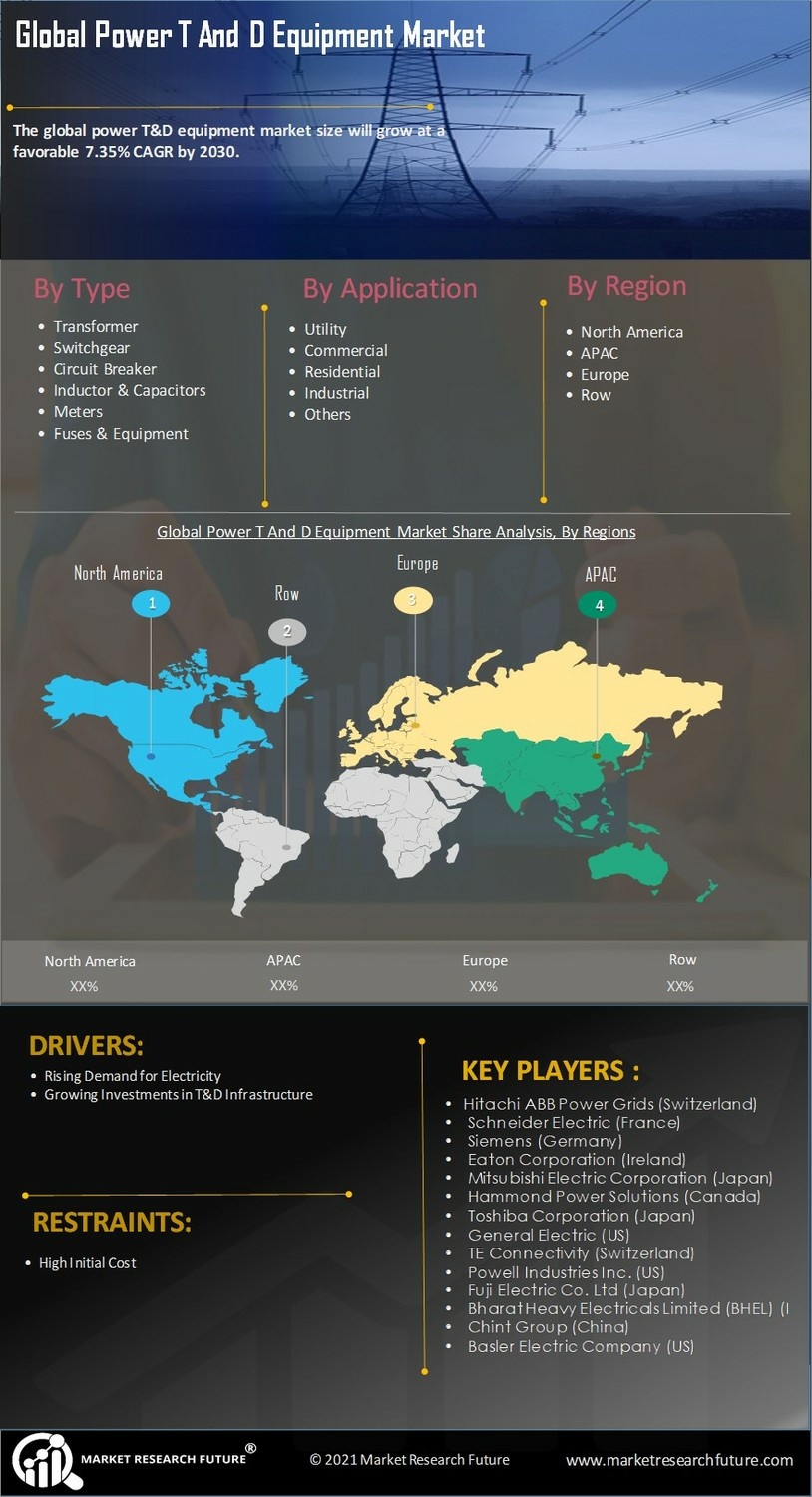
    The global energy landscape is evolving rapidly, and the Power T&D Equipment Market Growth is gaining significant attention as countries modernize their electricity infrastructure. Power transmission and distribution (T&D) equipment includes transformers, switchgear, cables, transmission towers, circuit breakers, and other components essential for delivering electricity from power plants to end users. As electricity demand continues to rise due to urbanization, industrialization, and digitalization, the need for efficient and reliable power networks is accelerating the growth of this market worldwide.

    One of the major drivers of the Power T&D Equipment Market is the growing demand for electricity across both developed and developing economies. Rapid urban expansion, the rise of smart cities, and increasing electrification in sectors such as transportation and manufacturing are significantly boosting electricity consumption. Governments and utilities are investing heavily in upgrading outdated power grids to ensure stable power delivery and reduce transmission losses. These investments are creating strong demand for advanced T&D equipment.

    Another key factor contributing to market growth is the integration of renewable energy sources such as solar, wind, and hydropower. Renewable energy generation is often located far from major consumption centers, which requires robust transmission networks to transport electricity efficiently. High-capacity transformers, advanced switchgear, and long-distance transmission lines are becoming essential components for integrating renewable power into national grids. As countries strive to meet climate goals and reduce carbon emissions, grid expansion and modernization projects are expected to increase.

    Technological advancements are also playing a crucial role in shaping the Power T&D Equipment Market. Smart grid technologies are being widely adopted to enhance monitoring, automation, and control within power networks. Smart sensors, digital substations, and automated grid management systems are improving efficiency and reducing operational costs. These innovations allow utilities to detect faults quickly, optimize power flow, and ensure reliable electricity distribution. The increasing adoption of digital infrastructure is therefore strengthening the demand for next-generation transmission and distribution equipment.

    Infrastructure development projects are another important growth driver. Many countries are investing in large-scale power infrastructure projects to support economic development and energy security. Emerging economies in Asia-Pacific, the Middle East, and Africa are expanding their transmission networks to improve rural electrification and industrial connectivity. Meanwhile, developed regions such as North America and Europe are focusing on replacing aging grid infrastructure with more efficient and resilient systems.

    The market is also benefiting from government policies and regulatory initiatives aimed at improving power efficiency. Many governments are implementing policies that encourage grid modernization and the adoption of energy-efficient equipment. Incentives for utilities and energy companies to upgrade their networks are further accelerating investments in T&D equipment. Additionally, the rising focus on reducing energy losses during transmission is prompting utilities to deploy advanced technologies and high-performance equipment.

    However, the market does face certain challenges. High installation and maintenance costs associated with advanced grid infrastructure can limit adoption in some regions. In addition, complex regulatory frameworks and long project approval timelines can delay infrastructure development projects. Despite these challenges, continuous technological innovation and strong government support are expected to maintain steady market growth in the coming years.

    Looking ahead, the Power T&D Equipment Market is expected to experience substantial expansion as energy systems become more decentralized and digitized. The growing use of distributed energy resources, electric vehicles, and energy storage systems will require flexible and intelligent grid infrastructure. This will create new opportunities for manufacturers and technology providers in the power transmission and distribution sector.

    In conclusion, the Power T&D Equipment Market is witnessing strong growth driven by rising electricity demand, renewable energy integration, smart grid adoption, and large-scale infrastructure investments. As global energy systems continue to evolve, efficient and reliable transmission and distribution networks will remain essential for ensuring stable and sustainable power supply.

    Power T&D Equipment Market Growth Driven by Grid Modernization Investments https://www.marketresearchfuture.com/reports/power-td-equipment-market-10689 The global energy landscape is evolving rapidly, and the Power T&D Equipment Market Growth is gaining significant attention as countries modernize their electricity infrastructure. Power transmission and distribution (T&D) equipment includes transformers, switchgear, cables, transmission towers, circuit breakers, and other components essential for delivering electricity from power plants to end users. As electricity demand continues to rise due to urbanization, industrialization, and digitalization, the need for efficient and reliable power networks is accelerating the growth of this market worldwide. One of the major drivers of the Power T&D Equipment Market is the growing demand for electricity across both developed and developing economies. Rapid urban expansion, the rise of smart cities, and increasing electrification in sectors such as transportation and manufacturing are significantly boosting electricity consumption. Governments and utilities are investing heavily in upgrading outdated power grids to ensure stable power delivery and reduce transmission losses. These investments are creating strong demand for advanced T&D equipment. Another key factor contributing to market growth is the integration of renewable energy sources such as solar, wind, and hydropower. Renewable energy generation is often located far from major consumption centers, which requires robust transmission networks to transport electricity efficiently. High-capacity transformers, advanced switchgear, and long-distance transmission lines are becoming essential components for integrating renewable power into national grids. As countries strive to meet climate goals and reduce carbon emissions, grid expansion and modernization projects are expected to increase. Technological advancements are also playing a crucial role in shaping the Power T&D Equipment Market. Smart grid technologies are being widely adopted to enhance monitoring, automation, and control within power networks. Smart sensors, digital substations, and automated grid management systems are improving efficiency and reducing operational costs. These innovations allow utilities to detect faults quickly, optimize power flow, and ensure reliable electricity distribution. The increasing adoption of digital infrastructure is therefore strengthening the demand for next-generation transmission and distribution equipment. Infrastructure development projects are another important growth driver. Many countries are investing in large-scale power infrastructure projects to support economic development and energy security. Emerging economies in Asia-Pacific, the Middle East, and Africa are expanding their transmission networks to improve rural electrification and industrial connectivity. Meanwhile, developed regions such as North America and Europe are focusing on replacing aging grid infrastructure with more efficient and resilient systems. The market is also benefiting from government policies and regulatory initiatives aimed at improving power efficiency. Many governments are implementing policies that encourage grid modernization and the adoption of energy-efficient equipment. Incentives for utilities and energy companies to upgrade their networks are further accelerating investments in T&D equipment. Additionally, the rising focus on reducing energy losses during transmission is prompting utilities to deploy advanced technologies and high-performance equipment. However, the market does face certain challenges. High installation and maintenance costs associated with advanced grid infrastructure can limit adoption in some regions. In addition, complex regulatory frameworks and long project approval timelines can delay infrastructure development projects. Despite these challenges, continuous technological innovation and strong government support are expected to maintain steady market growth in the coming years. Looking ahead, the Power T&D Equipment Market is expected to experience substantial expansion as energy systems become more decentralized and digitized. The growing use of distributed energy resources, electric vehicles, and energy storage systems will require flexible and intelligent grid infrastructure. This will create new opportunities for manufacturers and technology providers in the power transmission and distribution sector. In conclusion, the Power T&D Equipment Market is witnessing strong growth driven by rising electricity demand, renewable energy integration, smart grid adoption, and large-scale infrastructure investments. As global energy systems continue to evolve, efficient and reliable transmission and distribution networks will remain essential for ensuring stable and sustainable power supply.
    WWW.MARKETRESEARCHFUTURE.COM
    Power T&D Equipment Market 2025, Size, Share, Growth Report, 2035
    Power T&D Equipment Market to grow at a CAGR of 7.40%, due to rising industry growth, size, share, opportunities, key companies, trends, technology, sales, revenue, regions, demands, and forecast by 2035.
    πŸ‘οΈ 0 | πŸ’° Rs 0.00
    0 Commenti 0 condivisioni
    0 Anteprima
  • Green Energy Market Share Analysis and Growth Drivers Forecast 2035
    https://www.marketresearchfuture.com/reports/green-energy-market-12451
    As per Market Research Future, the Green Energy Market Share
    is expanding rapidly as nations worldwide transition toward sustainable and low-carbon energy systems. Green energy, derived from renewable sources such as solar, wind, hydro, geothermal, and biomass, has become central to global strategies aimed at reducing greenhouse gas emissions and combating climate change. The distribution of market share across regions and technologies reflects evolving policy frameworks, technological advancements, and investment patterns.

    Regionally, Asia-Pacific commands a significant portion of the global green energy market share. Countries such as China, India, and Japan have heavily invested in renewable energy infrastructure, driven by growing electricity demand and environmental concerns. China leads in solar and wind installations, while India continues to scale up both utility-scale and distributed renewable projects. Europe also holds a substantial share, supported by strong decarbonization policies and ambitious renewable energy targets. North America remains a key contributor, with increasing investments in solar farms, onshore and offshore wind projects, and energy storage systems.

    From a technology standpoint, solar and wind energy dominate the market share due to their scalability and declining costs. Solar photovoltaic systems have gained widespread adoption in residential, commercial, and utility sectors. Wind energy, particularly offshore wind, has seen significant growth in regions with favorable coastal conditions. Hydropower maintains a steady share, especially in countries with established hydroelectric infrastructure, while biomass and geothermal contribute smaller but stable portions of the market.

    The utility sector accounts for the largest share of green energy deployment. Large-scale renewable power plants connected to national grids form the backbone of clean electricity generation. However, distributed generation is increasingly influencing market share distribution. Rooftop solar panels, community wind projects, and microgrids are gaining traction, allowing consumers to generate and manage their own electricity.

    Corporate sustainability initiatives are also reshaping market share dynamics. Businesses are entering power purchase agreements (PPAs) with renewable energy providers to secure clean power and meet environmental, social, and governance (ESG) goals. This trend has accelerated investments in renewable capacity, strengthening the position of major green energy developers.

    Technological innovation continues to influence competitive positioning. Companies investing in advanced energy storage, grid integration solutions, and digital energy management platforms are gaining a competitive advantage. Energy storage systems, in particular, are enhancing the reliability of intermittent renewable sources, further boosting their adoption.

    Overall, the green energy market share is expected to evolve as emerging economies ramp up renewable investments and mature markets continue upgrading their infrastructure. Policy support, declining technology costs, and heightened environmental awareness will continue shaping the competitive landscape in the years ahead.

    FAQs

    1. Which region holds the largest green energy market share?
    Asia-Pacific holds a significant share due to large-scale renewable energy installations, particularly in China and India.

    2. What technologies dominate the green energy market?
    Solar and wind energy technologies dominate due to their cost-effectiveness and scalability.

    3. How do corporate sustainability goals affect market share?
    Corporate commitments to renewable energy increase investments in green projects, influencing market share distribution among developers.

    Green Energy Market Share Analysis and Growth Drivers Forecast 2035 https://www.marketresearchfuture.com/reports/green-energy-market-12451 As per Market Research Future, the Green Energy Market Share is expanding rapidly as nations worldwide transition toward sustainable and low-carbon energy systems. Green energy, derived from renewable sources such as solar, wind, hydro, geothermal, and biomass, has become central to global strategies aimed at reducing greenhouse gas emissions and combating climate change. The distribution of market share across regions and technologies reflects evolving policy frameworks, technological advancements, and investment patterns. Regionally, Asia-Pacific commands a significant portion of the global green energy market share. Countries such as China, India, and Japan have heavily invested in renewable energy infrastructure, driven by growing electricity demand and environmental concerns. China leads in solar and wind installations, while India continues to scale up both utility-scale and distributed renewable projects. Europe also holds a substantial share, supported by strong decarbonization policies and ambitious renewable energy targets. North America remains a key contributor, with increasing investments in solar farms, onshore and offshore wind projects, and energy storage systems. From a technology standpoint, solar and wind energy dominate the market share due to their scalability and declining costs. Solar photovoltaic systems have gained widespread adoption in residential, commercial, and utility sectors. Wind energy, particularly offshore wind, has seen significant growth in regions with favorable coastal conditions. Hydropower maintains a steady share, especially in countries with established hydroelectric infrastructure, while biomass and geothermal contribute smaller but stable portions of the market. The utility sector accounts for the largest share of green energy deployment. Large-scale renewable power plants connected to national grids form the backbone of clean electricity generation. However, distributed generation is increasingly influencing market share distribution. Rooftop solar panels, community wind projects, and microgrids are gaining traction, allowing consumers to generate and manage their own electricity. Corporate sustainability initiatives are also reshaping market share dynamics. Businesses are entering power purchase agreements (PPAs) with renewable energy providers to secure clean power and meet environmental, social, and governance (ESG) goals. This trend has accelerated investments in renewable capacity, strengthening the position of major green energy developers. Technological innovation continues to influence competitive positioning. Companies investing in advanced energy storage, grid integration solutions, and digital energy management platforms are gaining a competitive advantage. Energy storage systems, in particular, are enhancing the reliability of intermittent renewable sources, further boosting their adoption. Overall, the green energy market share is expected to evolve as emerging economies ramp up renewable investments and mature markets continue upgrading their infrastructure. Policy support, declining technology costs, and heightened environmental awareness will continue shaping the competitive landscape in the years ahead. FAQs 1. Which region holds the largest green energy market share? Asia-Pacific holds a significant share due to large-scale renewable energy installations, particularly in China and India. 2. What technologies dominate the green energy market? Solar and wind energy technologies dominate due to their cost-effectiveness and scalability. 3. How do corporate sustainability goals affect market share? Corporate commitments to renewable energy increase investments in green projects, influencing market share distribution among developers.

    WWW.MARKETRESEARCHFUTURE.COM
    Green Energy Market Size, Share, Trends, Growth Report, 2035
    Green Energy Market is projected to grow at an 9.60% CAGR from 2025 to 2035, driven by technological advancements, regulatory support, and increasing consumer demand for sustainable solutions.
    πŸ‘οΈ 0 | πŸ’° Rs 0.00
    0 Commenti 0 condivisioni
    0 Anteprima
  • The BPO Business Analytics Market has witnessed numerous successful implementations that highlight the potential of analytics in improving business outcomes. This article examines several case studies that demonstrate how organizations have leveraged BPO services to drive efficiency, enhance customer experiences, and achieve strategic goals.
    One notable case is a global retail company that sought to optimize its supply chain operations. By partnering with a BPO provider specializing in analytics, the company was able to implement predictive analytics to forecast demand accurately. The BPO provider analyzed historical sales data, seasonal trends, and market conditions to develop predictive models that informed inventory management decisions. As a result, the retailer reduced stockouts by 30% and minimized excess inventory, leading to significant cost savings and improved customer satisfaction.
    @https://www.marketresearchfuture.com/reports/bpo-business-analytics-market-10697
    The BPO Business Analytics Market has witnessed numerous successful implementations that highlight the potential of analytics in improving business outcomes. This article examines several case studies that demonstrate how organizations have leveraged BPO services to drive efficiency, enhance customer experiences, and achieve strategic goals. One notable case is a global retail company that sought to optimize its supply chain operations. By partnering with a BPO provider specializing in analytics, the company was able to implement predictive analytics to forecast demand accurately. The BPO provider analyzed historical sales data, seasonal trends, and market conditions to develop predictive models that informed inventory management decisions. As a result, the retailer reduced stockouts by 30% and minimized excess inventory, leading to significant cost savings and improved customer satisfaction. @https://www.marketresearchfuture.com/reports/bpo-business-analytics-market-10697
    WWW.MARKETRESEARCHFUTURE.COM
    BPO Business Analytics Market Size | Industry Report, 2035
    BPO Business Analytics Market size is projected to grow USD 11030.0 Million by 2035, exhibiting a CAGR of 10.83% during the forecast period 2025 - 2035
    πŸ‘οΈ 0 | πŸ’° Rs 0.00
    0 Commenti 0 condivisioni
    0 Anteprima
  • Photovoltaic Canopy Market Analysis 2035: Solar Parking Structures & Commercial Energy Solutions
    https://www.wiseguyreports.com/reports/photovoltaic-canopy-market
    The Photovoltaic Canopy Market is gaining strong momentum as organizations and governments seek innovative ways to combine renewable energy generation with infrastructure optimization. Photovoltaic (PV) canopies are elevated solar panel structures typically installed over parking lots, walkways, and open spaces. They generate clean electricity while providing shade and weather protection.

    A key driver of the market is the growing emphasis on sustainability and carbon reduction. Corporations, educational institutions, and commercial facilities are adopting PV canopies to meet environmental goals while reducing electricity costs. These systems not only offset grid power consumption but also enhance property value and corporate image.

    Technological advancements in solar modules and inverters are significantly boosting market growth. Higher-efficiency panels, bifacial modules, and integrated energy storage solutions improve overall performance. Additionally, smart energy management systems enable better utilization of generated power, particularly when combined with electric vehicle (EV) charging stations.

    The rise in electric mobility further strengthens the market outlook. PV canopies integrated with EV charging infrastructure create sustainable charging hubs powered by renewable energy. This dual functionality is especially attractive in urban areas where land availability is limited and maximizing space utilization is critical.

    Regionally, North America and Europe lead in adoption due to strong policy support and sustainability initiatives. Asia-Pacific is rapidly emerging as a promising market, supported by increasing solar investments and expanding urban infrastructure. Government incentives and renewable energy mandates are encouraging businesses to adopt solar canopy solutions.

    High upfront installation costs and structural design complexities can act as restraints. Proper engineering and site-specific customization are essential to ensure durability and optimal performance. Despite these challenges, declining solar component costs and supportive regulations are expected to drive long-term growth.

    The Photovoltaic Canopy Market is positioned as a strategic solution that aligns renewable energy production with practical infrastructure use, making it an attractive investment for commercial and institutional stakeholders.

    FAQs

    What is a photovoltaic canopy?
    It is an elevated solar panel structure installed over spaces like parking lots to generate electricity and provide shade.

    How do PV canopies benefit businesses?
    They reduce electricity costs, support sustainability goals, and can integrate EV charging solutions.

    What challenges affect the market?
    High initial costs and structural design requirements are primary challenges, though technology advancements are mitigating these issues.
    Photovoltaic Canopy Market Analysis 2035: Solar Parking Structures & Commercial Energy Solutions https://www.wiseguyreports.com/reports/photovoltaic-canopy-market The Photovoltaic Canopy Market is gaining strong momentum as organizations and governments seek innovative ways to combine renewable energy generation with infrastructure optimization. Photovoltaic (PV) canopies are elevated solar panel structures typically installed over parking lots, walkways, and open spaces. They generate clean electricity while providing shade and weather protection. A key driver of the market is the growing emphasis on sustainability and carbon reduction. Corporations, educational institutions, and commercial facilities are adopting PV canopies to meet environmental goals while reducing electricity costs. These systems not only offset grid power consumption but also enhance property value and corporate image. Technological advancements in solar modules and inverters are significantly boosting market growth. Higher-efficiency panels, bifacial modules, and integrated energy storage solutions improve overall performance. Additionally, smart energy management systems enable better utilization of generated power, particularly when combined with electric vehicle (EV) charging stations. The rise in electric mobility further strengthens the market outlook. PV canopies integrated with EV charging infrastructure create sustainable charging hubs powered by renewable energy. This dual functionality is especially attractive in urban areas where land availability is limited and maximizing space utilization is critical. Regionally, North America and Europe lead in adoption due to strong policy support and sustainability initiatives. Asia-Pacific is rapidly emerging as a promising market, supported by increasing solar investments and expanding urban infrastructure. Government incentives and renewable energy mandates are encouraging businesses to adopt solar canopy solutions. High upfront installation costs and structural design complexities can act as restraints. Proper engineering and site-specific customization are essential to ensure durability and optimal performance. Despite these challenges, declining solar component costs and supportive regulations are expected to drive long-term growth. The Photovoltaic Canopy Market is positioned as a strategic solution that aligns renewable energy production with practical infrastructure use, making it an attractive investment for commercial and institutional stakeholders. FAQs What is a photovoltaic canopy? It is an elevated solar panel structure installed over spaces like parking lots to generate electricity and provide shade. How do PV canopies benefit businesses? They reduce electricity costs, support sustainability goals, and can integrate EV charging solutions. What challenges affect the market? High initial costs and structural design requirements are primary challenges, though technology advancements are mitigating these issues.
    Circular Power Connector Market: Future Outlook and Trends 2035
    Circular Power Connector Market Size was estimated at 13.51 (USD Billion) in 2023. The Circular Power Connector Market Industry is expected to grow from 14.95(USD Billion) in 2024 to 33.7 (USD Billion) by 2032.
    πŸ‘οΈ 0 | πŸ’° Rs 0.00
    0 Commenti 0 condivisioni
    0 Anteprima
  • Prime Power Generator Market Analysis Covering Reliability and Operating Costs

    https://www.marketresearchfuture.com/reports/prime-power-generator-market-24977

    As per Market Research Future, the Prime Power Generator Market Analysis highlights steady expansion driven by industrial dependence on continuous power supply. Prime power generators function as the main electricity source in off-grid and remote areas, making them indispensable for mission-critical operations across multiple industries.

    Market analysis reveals increasing preference for high-capacity generators that offer improved fuel efficiency and reduced maintenance costs. Industrial operators prioritize long operational life and reliability, which has led manufacturers to invest in advanced engine technologies and digital monitoring systems.

    Fuel type segmentation plays a critical role in shaping market dynamics. Diesel generators dominate due to their robustness and ease of fuel availability. However, environmental concerns and fuel price volatility are pushing industries to explore gas-powered and dual-fuel generators. These alternatives offer lower emissions and operational flexibility, aligning with sustainability goals.

    Capacity-wise, generators above 375 kVA are witnessing growing adoption, particularly in heavy industries and large-scale infrastructure projects. Smaller capacity units continue to serve agricultural operations and small industrial facilities.

    The analysis also emphasizes the role of regulations in influencing market trends. Governments worldwide are implementing emission norms that encourage the adoption of cleaner generator technologies. As a result, manufacturers are integrating emission control systems without compromising performance.

    Regionally, developed economies focus on upgrading existing power infrastructure, while developing regions prioritize expanding industrial capacity. Asia-Pacific remains a strong growth region, supported by manufacturing expansion and energy-intensive industries.

    FAQs

    What does market analysis indicate about future demand?
    Demand is expected to rise steadily due to industrial growth and increasing off-grid operations.

    Which fuel type dominates the market?
    Diesel generators currently dominate, though gas and hybrid options are growing.

    Are emission regulations impacting the market?
    Yes, regulations are encouraging cleaner and more efficient generator technologies.
    Prime Power Generator Market Analysis Covering Reliability and Operating Costs https://www.marketresearchfuture.com/reports/prime-power-generator-market-24977 As per Market Research Future, the Prime Power Generator Market Analysis highlights steady expansion driven by industrial dependence on continuous power supply. Prime power generators function as the main electricity source in off-grid and remote areas, making them indispensable for mission-critical operations across multiple industries. Market analysis reveals increasing preference for high-capacity generators that offer improved fuel efficiency and reduced maintenance costs. Industrial operators prioritize long operational life and reliability, which has led manufacturers to invest in advanced engine technologies and digital monitoring systems. Fuel type segmentation plays a critical role in shaping market dynamics. Diesel generators dominate due to their robustness and ease of fuel availability. However, environmental concerns and fuel price volatility are pushing industries to explore gas-powered and dual-fuel generators. These alternatives offer lower emissions and operational flexibility, aligning with sustainability goals. Capacity-wise, generators above 375 kVA are witnessing growing adoption, particularly in heavy industries and large-scale infrastructure projects. Smaller capacity units continue to serve agricultural operations and small industrial facilities. The analysis also emphasizes the role of regulations in influencing market trends. Governments worldwide are implementing emission norms that encourage the adoption of cleaner generator technologies. As a result, manufacturers are integrating emission control systems without compromising performance. Regionally, developed economies focus on upgrading existing power infrastructure, while developing regions prioritize expanding industrial capacity. Asia-Pacific remains a strong growth region, supported by manufacturing expansion and energy-intensive industries. FAQs What does market analysis indicate about future demand? Demand is expected to rise steadily due to industrial growth and increasing off-grid operations. Which fuel type dominates the market? Diesel generators currently dominate, though gas and hybrid options are growing. Are emission regulations impacting the market? Yes, regulations are encouraging cleaner and more efficient generator technologies.
    WWW.MARKETRESEARCHFUTURE.COM
    Prime Power Generator Market Size, Growth, Trends Report 2035
    Prime Power Generator Market to Grow CAGR of 4.52% By 2035, by driving industry size, share, top company analysis, segments research, trends and forecast report 2025 to 2035.
    πŸ‘οΈ 0 | πŸ’° Rs 0.00
    0 Commenti 0 condivisioni
    0 Anteprima
  • Couple goals
    Couple goals
    Angry
    1
    πŸ‘οΈ 0 | πŸ’° Rs 0.00
    0 Commenti 0 condivisioni
    0 Anteprima
  • Couple goals
    Couple goals
    Yay
    1
    πŸ‘οΈ 0 | πŸ’° Rs 0.00
    0 Commenti 0 condivisioni
    0 Anteprima
  • Couple goals
    Couple goals
    πŸ‘οΈ 0 | πŸ’° Rs 0.00
    0 Commenti 0 condivisioni
    0 Anteprima
  • ASEAN Energy Transition Market Growth Driven by Policy Support
    https://www.marketresearchfuture.com/reports/asean-energy-transition-market-16199
    As per Market Research Future, the ASEAN Energy Transition Market Growth
    reflects the region’s accelerating shift toward sustainable, low-carbon energy systems driven by economic expansion, rising electricity demand, and climate commitments. ASEAN countries are experiencing rapid urbanization and industrialization, which is significantly increasing energy consumption. To balance growth with sustainability, governments are actively promoting cleaner energy sources, efficiency measures, and modern power infrastructure.

    The growth of the ASEAN energy transition market is strongly supported by policy frameworks encouraging renewable energy adoption. National targets for solar, wind, hydropower, and biomass capacity are pushing utilities and private players to invest in diversified energy portfolios. At the same time, declining costs of renewable technologies are improving project viability, attracting foreign direct investment and regional collaboration. Grid modernization and digital energy management systems are further enabling large-scale renewable deployment.

    Another key contributor to market growth is the electrification of transport and industry. Electric vehicles, charging infrastructure, and industrial electrification initiatives are expanding across ASEAN economies, increasing demand for clean power. Energy storage solutions, including batteries and pumped hydro, are also gaining traction to address intermittency challenges. Together, these factors are creating a strong foundation for sustained market expansion.

    The private sector plays a vital role in accelerating growth through public–private partnerships, power purchase agreements, and innovative financing models. Multilateral development banks and green funds are supporting large infrastructure projects, while local startups are introducing smart energy solutions. As awareness of climate risks grows, corporate sustainability goals are aligning with national energy transition strategies, reinforcing market momentum.

    Looking ahead, ASEAN energy transition market growth is expected to remain robust as countries strengthen cross-border power trade, enhance regulatory clarity, and invest in workforce skills. The transition not only supports environmental objectives but also improves energy security, reduces import dependence, and creates long-term economic opportunities across the region.

    FAQs

    What is driving growth in the ASEAN energy transition market?
    Growth is driven by rising energy demand, supportive government policies, falling renewable energy costs, and increased private investment.

    Which technologies are contributing most to market growth?
    Solar, wind, energy storage, smart grids, and electric mobility technologies are major contributors.

    How does energy transition growth benefit ASEAN economies?
    It enhances energy security, reduces emissions, attracts investment, and supports sustainable economic development.
    ASEAN Energy Transition Market Growth Driven by Policy Support https://www.marketresearchfuture.com/reports/asean-energy-transition-market-16199 As per Market Research Future, the ASEAN Energy Transition Market Growth reflects the region’s accelerating shift toward sustainable, low-carbon energy systems driven by economic expansion, rising electricity demand, and climate commitments. ASEAN countries are experiencing rapid urbanization and industrialization, which is significantly increasing energy consumption. To balance growth with sustainability, governments are actively promoting cleaner energy sources, efficiency measures, and modern power infrastructure. The growth of the ASEAN energy transition market is strongly supported by policy frameworks encouraging renewable energy adoption. National targets for solar, wind, hydropower, and biomass capacity are pushing utilities and private players to invest in diversified energy portfolios. At the same time, declining costs of renewable technologies are improving project viability, attracting foreign direct investment and regional collaboration. Grid modernization and digital energy management systems are further enabling large-scale renewable deployment. Another key contributor to market growth is the electrification of transport and industry. Electric vehicles, charging infrastructure, and industrial electrification initiatives are expanding across ASEAN economies, increasing demand for clean power. Energy storage solutions, including batteries and pumped hydro, are also gaining traction to address intermittency challenges. Together, these factors are creating a strong foundation for sustained market expansion. The private sector plays a vital role in accelerating growth through public–private partnerships, power purchase agreements, and innovative financing models. Multilateral development banks and green funds are supporting large infrastructure projects, while local startups are introducing smart energy solutions. As awareness of climate risks grows, corporate sustainability goals are aligning with national energy transition strategies, reinforcing market momentum. Looking ahead, ASEAN energy transition market growth is expected to remain robust as countries strengthen cross-border power trade, enhance regulatory clarity, and invest in workforce skills. The transition not only supports environmental objectives but also improves energy security, reduces import dependence, and creates long-term economic opportunities across the region. FAQs What is driving growth in the ASEAN energy transition market? Growth is driven by rising energy demand, supportive government policies, falling renewable energy costs, and increased private investment. Which technologies are contributing most to market growth? Solar, wind, energy storage, smart grids, and electric mobility technologies are major contributors. How does energy transition growth benefit ASEAN economies? It enhances energy security, reduces emissions, attracts investment, and supports sustainable economic development.
    WWW.MARKETRESEARCHFUTURE.COM
    ASEAN Energy Transition Market Size, Share Report 2035
    ASEAN Energy Transition Market is Projected to grow at a CAGR of 8.80% by 2035, ASEAN Energy Transition Industry Analysis by Type, Application, Size, Share, Growth, Trends | ASEAN Energy Transition Market Overview.
    Like
    1
    πŸ‘οΈ 0 | πŸ’° Rs 0.00
    0 Commenti 0 condivisioni
    0 Anteprima
Pagine in Evidenza
Freecave – Social Media Platform https://freecave.net